Vehicle-agnostic
neighborhood logistics
The right package. The right vehicle. The right neighborhood.

Built to connect incoming freight with the people and vehicles working at street level. Concept illustration.
THE VEHICLE IS SELECTED FOR THE WORK
The warehouse.
At street level.
Bring incoming freight closer to the people waiting for it. VANL's model connects carrier injection, a mobile warehouse and neighborhood delivery cells—matching each parcel wave with the territory, vehicle and agent for the work.
Explore the mobile hubCarrier injection
Receive incoming parcel volume at an agreed injection point.
TRK-001 mobile hub
Stage and reposition inventory close to neighborhood demand.
Neighborhood cells
Release defined waves to right-sized vehicles and local agents.
The warehouse doesn't have to wait for the neighborhood.
We bring the warehouse to it.
LOCAL EXECUTION
Every block
is a node.
Carrier freight enters where the city can accept it. VANL turns that injection point into a responsive neighborhood network—rather than routing every parcel through another distant warehouse.

Inventory
in motion.
TRK-001 is VANL's first mobile hub: a moving warehouse built for the operating tempo of New York—receiving, staging, dispatching and repositioning parcel volume without asking the neighborhood to come to us.
Carrier freight → sort → mobile hub → cell release
Right-sized vehicles.
Exact work.
VANL divides neighborhood volume into delivery cells: localized operating units matched to a defined parcel wave, territory and vehicle. Each cell deploys, delivers, reloads and redeploys as the network moves.
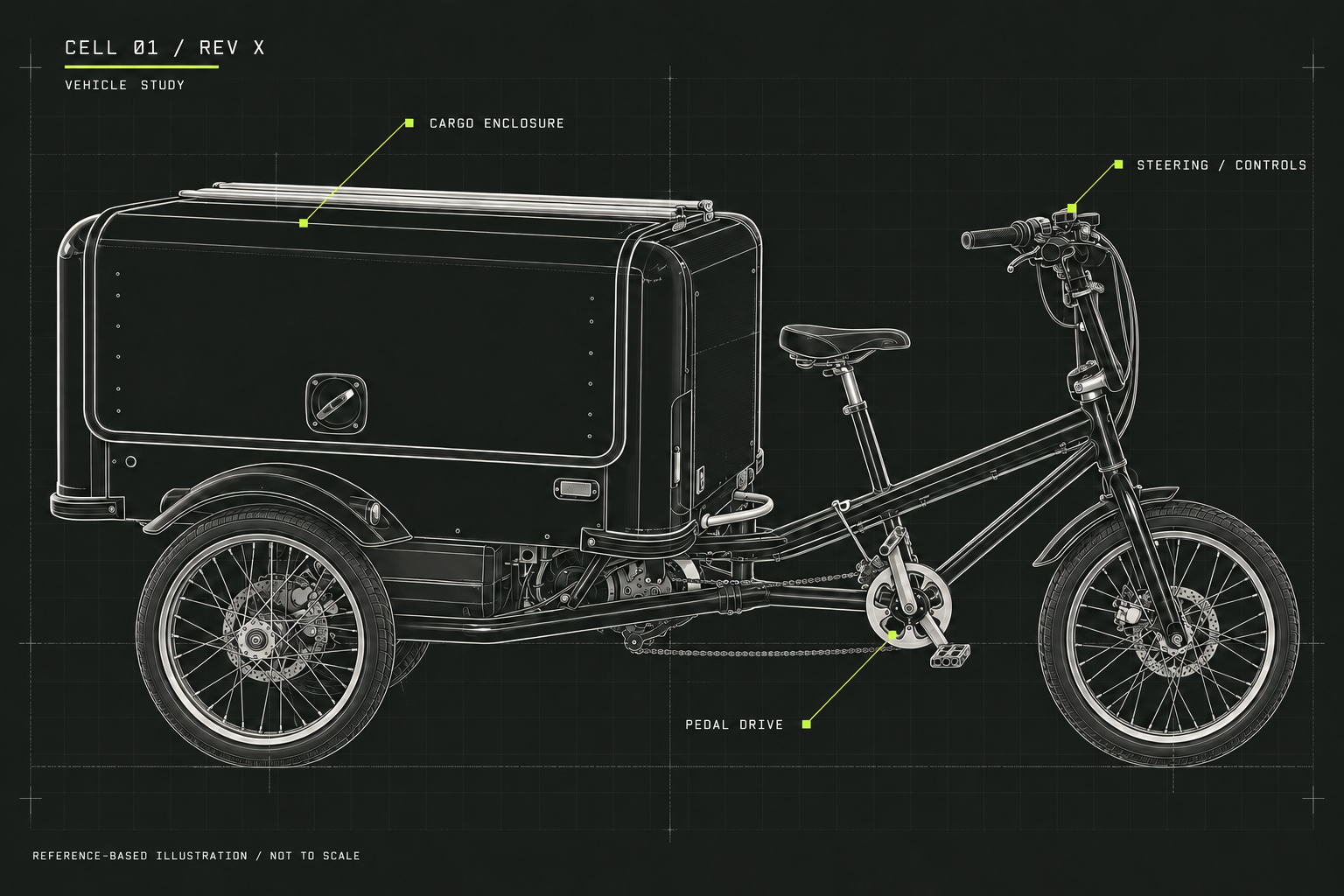
Not every delivery needs a van. Not every street needs the same machine.
The cell is the operating unit. The vehicle is selected for the work.
REV X
Cargo quad
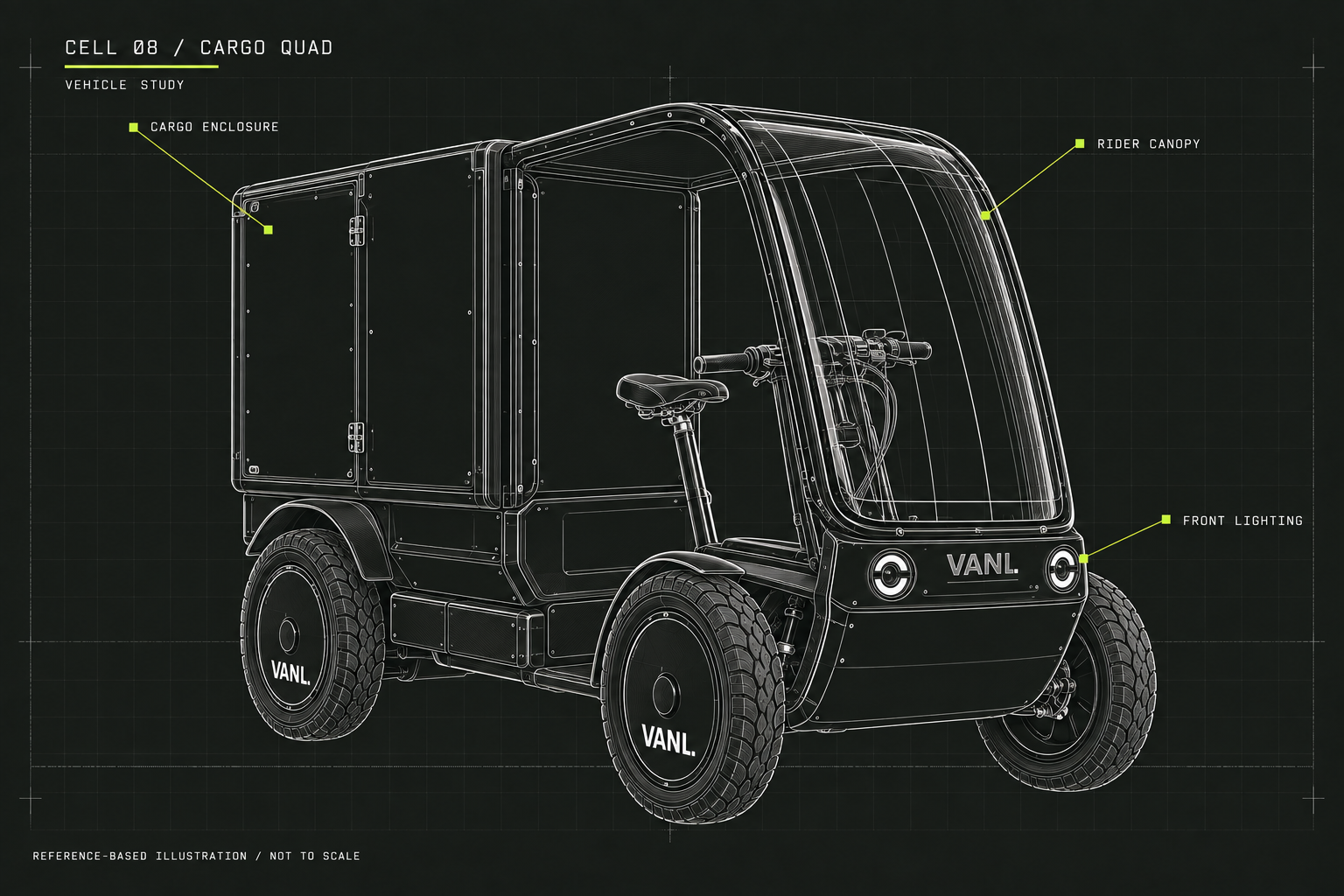
Reference-based vehicle studies / not to scale. Cell assignments vary with the work. Walking agents also form part of the vehicle-agnostic operating model.
The next task.
Right in view.
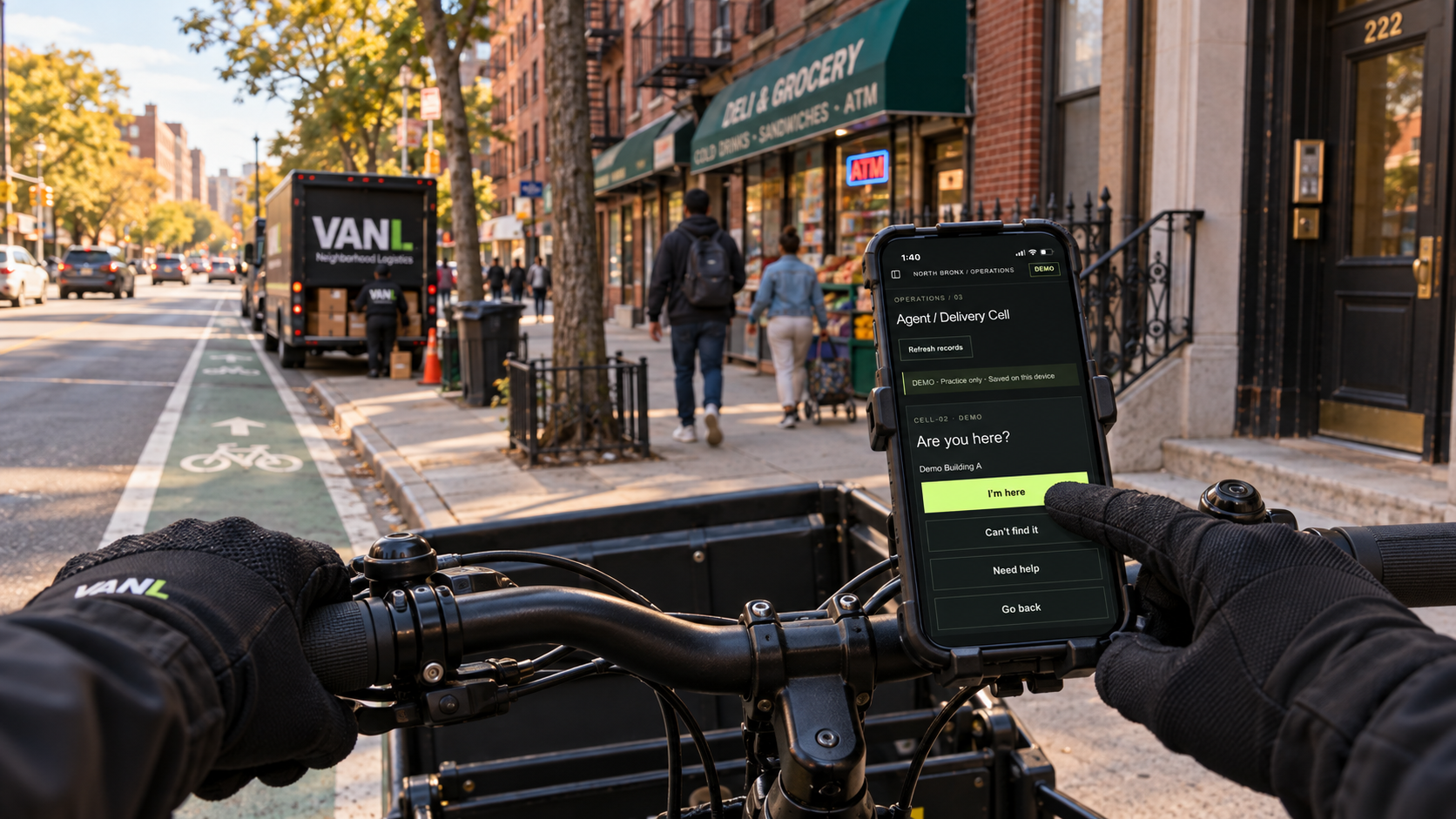
A mounted phone brings the next stop and its check-in steps into view. The illustrated VANL workflow gives agents a clear way to confirm arrival, flag a location issue, or request support while stopped at the delivery point.
Confirm arrival.
Flag a location issue.
Request support.
VANL OS
keeps time
with the city.
VANL OS is the operational layer behind the network. It connects parcel movement, vehicle telemetry, delivery cells, agent activity, exceptions and operating economics—turning physical movement into measurable intelligence.
- JFK carrier injection
- Whitestone Bridge
- Bronx mobile hub
- Neighborhood cell release

- Injection received
- 138 parcels
- TRK-001 staged
- 42 parcels
- Cell 08 released
- 31 parcels
- Cargo quad active
- 12 stops
- Proof of handoff
- 86 complete
- Exceptions
- 02 open
Separate operational measures within an illustrative snapshot; these values are not additive.
A NETWORK, NOT A DASHBOARD. EVERY MOVEMENT BECOMES INTELLIGENCE.
Your volume.
Our neighborhood operating model.
VANL is piloting a flexible last-mile model that connects carrier injection, mobile staging and multiple delivery vehicles. We’re looking for partners to help test the model against real routes, real parcel volume and measurable operating results.
Choose your role to explore how it connects to VANL.
01CarriersExtend injection, improve final-mile control, and serve dense neighborhoods with a more flexible operating model.
Freight meets the neighborhood.
- Carrier injection
- TRK-001 staging
- Cell release
- Local handoff
Define injection windows, parcel profiles and the neighborhood territory.
Explore carriers partnership ↗02MerchantsBring inventory, delivery, pickup, and returns closer to the customers already around you.
Inventory closer to demand.
- Merchant inventory
- Neighborhood hub
- Customer order
- Delivery or pickup
Explore local inventory positioning, delivery windows, pickup and returns.
Explore merchants partnership ↗03PropertyTurn buildings and portfolios into useful neighborhood touchpoints without sacrificing resident experience.
A useful front door.
- Property access
- Neighborhood hub
- Resident service
- Pickup or return
Identify access rules, available space and the resident experience.
Explore property partnership ↗04Vehicle Partners & OperatorsPut specialized vehicles and experienced local operators into a network that measures each platform against the work it actually performs.
Match the machine to the work.
- Vehicle + operator
- Defined territory
- Assigned parcel wave
- Reload + redeploy
Evaluate the platform, operator coverage and the territory it can serve.
Explore vehicle partners & operators partnership ↗Pilot with VANL.
Put the model to work.
Start with a real operating question. Together, we define a manageable scope, agree who does what, and measure the results before deciding what comes next.
Parcel volume
Define parcel profiles, injection windows and an agreed operating wave.
Injection windows · delivery cells · handoff procedures · responsibilities
- Completion rate
- Completed deliveries within the agreed scope.
- Exceptions
- Issues recorded, resolved and reviewed.
- Time per stop
- Time spent serving each delivery stop.
- Cost per completed delivery
- Agreed operating costs against completed work.
Illustrative pilot structure. Scope, availability, measures and commercial terms are agreed with each partner.
Tell us where
you fit.
A brief introduction is enough to begin.
How we handle inquiries ↗It starts with delivery.
It doesn't end there.
Explore each service through the neighborhood network.
From the mobile hub to the doorstep.
A parcel wave moves through staging, cell release and agent-led delivery.
- Mobile inventory
- Delivery cell
- Customer handoff
A neighborhood collection point.
A local touchpoint holds a parcel for collection, with readiness and custody tracked through the workflow.
- Incoming parcel
- Neighborhood hub
- Customer collection
The same network, in reverse.
A return enters locally, is recorded and consolidated, then moves back into the appropriate carrier flow.
- Customer return
- Local intake
- Carrier handback
Stock within reach of the work.
A neighborhood hub can position inventory for a merchant or service team and release it against local needs.
- Business inventory
- Local storage
- Replenishment
Local demand. Local fulfillment.
Local orders connect available merchant stock with pickup or neighborhood delivery.
- Customer demand
- Merchant stock
- Local fulfillment
Built in New York.
Designed to scale anywhere.
The city is the proving ground. The system is portable: mobile hubs, right-sized delivery cells, local intelligence and neighborhood infrastructure assembled around the needs of each market.
Build with VANL ↗